
|
|
|
 08-24-2020, 01:52 PM |
#1 |
|
Member
How Do You Identify?:
Femme, Human Preferred Pronoun?:
She, Her 
Join Date: Jul 2017
Location: Canada
Posts: 1,150
Thanks: 966
Thanked 2,419 Times in 890 Posts
Rep Power: 21474847   |
 Russia’s Navalny in Coma, Allegedly Poisoned by Toxic Tea 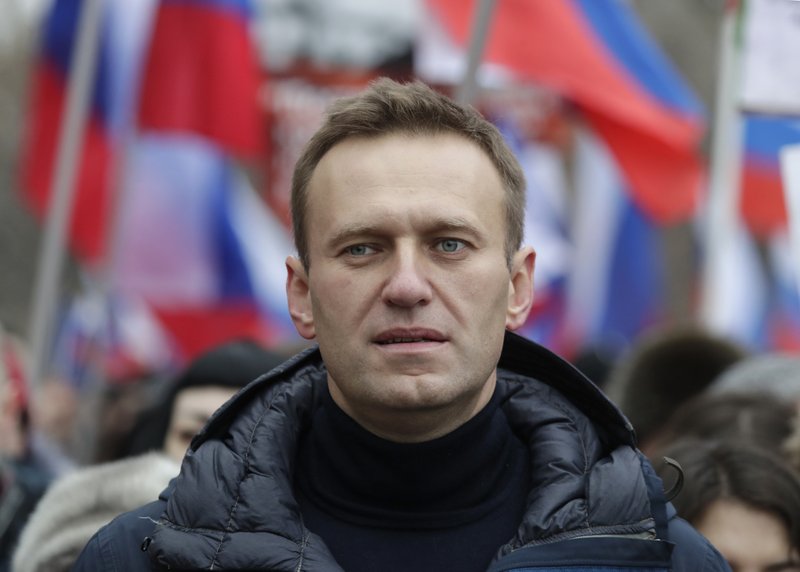 Alexei Navalny MOSCOW (AP) — Russian opposition leader Alexei Navalny, one of Vladimir Putin’s fiercest critics, lay in a coma Friday at a Siberian hospital, the victim of what his allies said appeared to be a poisoning engineered by the Kremlin. Navalny’s organization was scrambling to make arrangements to transfer him to Germany for treatment; a German group said it was ready to send a plane for him and that a noted hospital in Berlin was ready to treat him. The 44-year-old Navalny fell ill on a flight back to Moscow from the Siberian city of Tomsk on Thursday and was taken to a hospital after the plane made an emergency landing in Omsk, Navalny’s spokeswoman, Kira Yarmysh, said on Twitter. She told the Echo Moskvy radio station that he must have consumed poison in tea he drank at an airport cafe before boarding the plane early Thursday. During the flight, Navalny started sweating and asked her to talk to him so that he could “focus on the sound of a voice.” He then went to the bathroom and lost consciousness, and has been in a coma and on a ventilator in grave condition ever since. In a video statement released early Friday in Omsk, Yarmysh said Navalny remained in critical condition and she called on the hospital’s leadership “not to obstruct us from providing all necessary documents for his transfer.” It was not clear what the possible obstructions could be. Other opposition figures were quick to suggest Kremlin involvement. “We are sure that the only people that have the capability to target Navalny or myself are Russian security services with definite clearance from Russia’s political leadership,” Pyotr Verzilov, a member of the protest group Pussy Riot who ended up in intensive care after suspected poisoning in 2018, told The Associated Press. “We believe that Putin definitely is a person who gives that go-ahead in this situation.” MORE STORIES: – Toxic tea: Multiple Russians hit by suspected poisonings – Belarus leader warns of tough new steps against protesters – Belarus chaos brings a poker-faced response from Russia Jaka Bizilj of the German organization Cinema For Peace, which arranged for Verzilov’s treatment in Germany, said that at Verzilov’s request “we will send at midnight an air ambulance with medical equipment and specialists with which Navalny can be brought to Germany.” Omsk is about 4,200 kilometers (2,500 miles) east of Berlin, roughly a six-hour flight. Doctors at Omsk Ambulance Hospital No. 1, where the politician was being treated, remained tight-lipped about his diagnosis saying only that they were considering a variety of theories, including poisoning. Local health officials said they found no indication that Navalny had suffered from a heart attack, stroke or the coronavirus. Authorities initially refused to let Navalny’s wife, Yulia, see her husband and have rejected requests for documentation that would allow him to be transferred to a European hospital for treatment, Yarmysh said. Verzilov, who was flown to Berlin for treatment in 2018, said hospitals in Omsk or Moscow would not be able to treat Navalny properly and expressed concern about possible pressure from security services that doctors could be under in Russia. Kremlin spokesman Dmitry Peskov said it was necessary to wait for test results showing what caused Navalny’s condition, adding the authorities would consider a request to allow Navalny to leave Russia, which has not fully opened its borders after a coronavirus lockdown, for treatment. State news agency Tass reported that police were not considering deliberate poisoning, a statement the politician’s allies dismissed. Reports about the alleged poisoning made waves in the West. French President Emmanuel Macron said France was ready to offer Navalny and his family “all necessary assistance ... in terms of health care, asylum, protection” and insisted on the need to clarify what happened. German Chancellor Angela Merkel, speaking at a joint news conference with Macron, echoed that sentiment. “What is very important is that it will be clarified very urgently how it could come to the situation.” British Foreign Secretary Dominic Raab and the United Nations also expressed concern over what happened to Navalny, and Amnesty International demanded a full and thorough investigation. The widow of Alexander Litvinenko, the Russian agent who was killed in London by radioactive poisoning in 2006, voiced concern that Navalny’s enemies within Russia may have decided that it’s time to use a “new tactic.” “Maybe they decided ... not to stop him just with an arrest but to stop him with poison. It looks like a new tactic against Navalny,” Marina Litvinenko told The Associated Press from Sicily, Italy. Like many other opposition politicians in Russia, Navalny has been frequently detained by law enforcement and harassed by pro-Kremlin groups. In 2017, he was attacked by several men who threw antiseptic in his face, damaging an eye. Last year, Navalny was rushed to a hospital from prison, where he was serving a sentence following an administrative arrest, with what his team said was suspected poisoning. Doctors said he had a severe allergic attack and discharged him back to prison the following day. Navalny’s Foundation for Fighting Corruption has been exposing graft among government officials, including some at the highest level. Last month, he had to shut the foundation after a financially devastating lawsuit from Yevgeny Prigozhin, a businessman with close ties to the Kremlin. Belarus’ authoritarian President Alexander Lukashenko accused Navalny last week of organizing unprecedented mass protests against his re-election that have rocked Russia’s ex-Soviet neighbor since Aug. 9. He did not, however, provide any evidence and that claim was one of many blaming foreign forces for the unrest. The most prominent member of Russia’s opposition, Navalny campaigned to challenge Putin in the 2018 presidential election, but was barred from running. He set up campaign offices across Russia and has been promoting opposition candidates in regional elections, challenging members of Russia’s ruling party, United Russia. One of his associates in Khabarovsk, a city in Russia’s Far East that has been engulfed in mass protests against the arrest of the region’s governor, was detained last week after calling for a strike at a rally. Full Coverage: Russia In the interview with Echo Moskvy, Yarmysh said she believed the suspected poisoning was connected to this year’s regional election campaign. Commentators say Navalny has become increasingly dangerous for the Kremlin as Putin’s approval rating has plummeted to a record low of around 60% amid the coronavirus pandemic and growing public frustration with the declining economy. Navalny’s ability to mobilize voters against pro-Kremlin candidates poses a particular challenge ahead of the 2021 parliamentary elections, said Abbas Gallyamov, a former Kremlin speechwriter-turned-political-analyst. “The Duma elections are particularly important for the Kremlin,” as the new Duma will be operating in 2024, when Putin’s current presidential term expires and he may announce running for re-election, Gallyamov told the AP. “That’s why controlling the next State Duma is crucially important for the Kremlin. Navalny really makes it harder for the Kremlin to establish that control,” Gallyamov added. At the same time Navalny, who rose to prominence by exposing corruption all over Russia, could have other enemies, Gallyamov said, and may have been targeted by people featured in one of his investigations, if he was indeed deliberately poisoned. Navalny is not the first opposition figure to come down with a mysterious poisoning. Verzilov, who spent a month in a hospital recovering from his suspected 2018 poisoning, told the AP that Navalny’s initial symptoms — loss of coordination, pain, fainting — were very similar to his. Opposition activist Vladimir Kara-Murza was hospitalized with poisoning symptoms twice — in 2015 and 2017. Prominent journalist Anna Politkovskaya was also reportedly poisoned in 2004 — two years before being murdered. On Thursday evening, activists in several Russian cities held protests in support of Navalny. In St. Petersburg, a crowd of about 100 people gathered in the city center, and several supporters were detained. “It was actually in the interests of the authorities to safeguard him,” Yegor Batozhok, 34, a municipal deputy in St. Petersburg, told the AP. “But for some reason a number of those who criticize the authorities get poisoned.” ___ Associated Press writers Irina Titova in St. Petersburg, Angela Charlton in Paris, Pan Pylas in London, Alexander Roslyakov and Jim Heintz in Moscow and Kirsten Grieshaber in Berlin contributed. Source: apnews.com Website: https://bit.ly/3hp8eyk Date: August 20, 2020 |

|

|
| The Following User Says Thank You to PlatinumPearl For This Useful Post: |
|
08-24-2020, 02:01 PM
|
#2 |
|
Member
How Do You Identify?:
Femme, Human Preferred Pronoun?:
She, Her
Join Date: Jul 2017
Location: Canada
Posts: 1,150
Thanks: 966
Thanked 2,419 Times in 890 Posts
Rep Power: 21474847 |
Scientists Say Hong Kong Man Got Coronavirus a Second Time
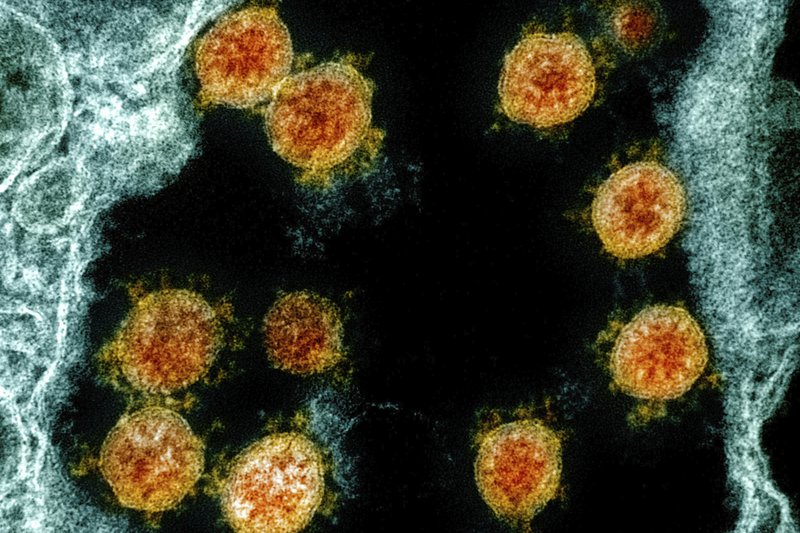 This electron microscope image made available and color-enhanced by the National Institute of Allergy and Infectious Diseases Integrated Research Facility in Fort Detrick, Md., shows Novel Coronavirus SARS-CoV-2 virus particles, orange, isolated from a patient. University of Hong Kong scientists claim to have the first evidence of someone being reinfected with the virus that causes COVID-19. They said Monday, Aug. 24, 2020 that genetic tests show a 33-year-old man returning to Hong Kong from a trip to Spain in mid-August had a different strain of the coronavirus than the one he’d previously been infected with in March. (NIAID/National Institutes of Health via AP) University of Hong Kong scientists claim to have the first evidence of someone being reinfected with the virus that causes COVID-19. Genetic tests revealed that a 33-year-old man returning to Hong Kong from a trip to Spain in mid-August had a different strain of the coronavirus than the one he’d previously been infected with in March, said Dr. Kelvin Kai-Wang To, the microbiologist who led the work. The man had mild symptoms the first time and none the second time; his more recent infection was detected through screening and testing at the Hong Kong airport. “It shows that some people do not have lifelong immunity” to the virus if they’ve already had it, To said. “We don’t know how many people can get reinfected. There are probably more out there.” The paper has been accepted by the journal Clinical Infectious Diseases but not yet published, and some independent experts urged caution until full results are available. Whether people who have had COVID-19 are immune to new infections and for how long are key questions that have implications for vaccine development and decisions about returning to work, school and social activities. Even if someone can be infected a second time, it’s not known if they have some protection against serious illness, because the immune system generally remembers how to make antibodies against a virus it’s seen before. It’s not clear how different a virus needs to be to trigger illness, but the new work suggests that “COVID patients should not be complacent about prevention measures” and should continue social distancing, wearing masks and other ways to reduce infection, To said. Two experts with with no role in the work agreed. “We’ve always known reinfection was a possibility and I think this is highly suggestive” that it occurred in this case, said Dr. Jesse Goodman, a former U.S. Food and Drug Administration chief scientist now at Georgetown University. “If there is a reinfection, it suggests the possibility there was residual immunity ... that helped protect the patient” from getting sick again, Goodman said. However, “if immunity wanes from natural infection, it could be a challenge for vaccines” and may mean booster shots are needed, he added. Julie Fischer, a microbiologist at CRDF Global, a nonprofit health group in Arlington, Virginia, said the study gives convincing evidence that reinfection can happen. “The real question is what this means for severity of disease” if that occurs, and whether such people can infect others, she said. One expert saw the report as good news. Dr. Paul Offit, a vaccine expert at Children’s Hospital of Philadelphia, said it’s encouraging the reported reinfection was without symptoms. “That’s a win as far as I’m concerned” because it suggests a first infection may protect a person from moderate to severe disease the second time around, he said in an interview streamed by the Journal of the American Medical Association. A mid-May survey by the doctors’ information-sharing site Sermo found that 13% of the 4,173 doctors responding believed that they had treated one or more patients who were reinfected. Among the respondents, 7% of those in the U.S. and 16% in other countries thought they’d seen such a case. However, health officials have also wondered whether people who tested positive long after their initial illness were simply showing signs of not completely clearing the virus rather than being infected anew. ___ AP medical writers Linda A. Johnson and Carla K. Johnson contributed to this report. ___ The Associated Press Health and Science Department receives support from the Howard Hughes Medical Institute’s Department of Science Education. The AP is solely responsible for all content. Source: apnews.com Website: https://bit.ly/3hqcduh Date: August 24, 2020 |
|
|
|
|
08-24-2020, 05:07 PM
|
#3 | |
|
Practically Lives Here
How Do You Identify?:
Butch Relationship Status:
..... Join Date: Nov 2009
Location: 30 minute ferry ride from Seattle
Posts: 38,565
Thanks: 20,811
Thanked 33,541 Times in 14,913 Posts
Rep Power: 21474890 |
Quote:
|
|
|
|
|
| The Following User Says Thank You to homoe For This Useful Post: |
|
08-28-2020, 09:34 AM
|
#4 |
|
Practically Lives Here
How Do You Identify?:
Butch Relationship Status:
..... Join Date: Nov 2009
Location: 30 minute ferry ride from Seattle
Posts: 38,565
Thanks: 20,811
Thanked 33,541 Times in 14,913 Posts
Rep Power: 21474890 |
Russian prosecutors reject criminal investigation into illness of Kremlin critic Alexei Navalny..
Russian prosecutors said on Thursday they saw no need for a criminal investigation into the sudden illness of Kremlin critic Alexei Navalny, whom his supporters suspect was poisoned, and that they had found no sign that any crime had been committed.
The Interior Ministry said it had started a preliminary investigation into the case, but this was routine. According to a statement released Thursday by a branch of Russia's Interior Ministry, investigators in Siberia have been working on "establishing all the circumstances of the incident," conducting forensic studies and collecting items "that may have probative value." Navalny, an opposition politician and corruption investigator who is one of President Vladimir Putin's fiercest critics, fell ill on a flight back to Moscow from Siberia last Thursday and was taken to a hospital in the Siberian city of Omsk after the plane made an emergency landing. https://www.cbc.ca/news/world/russia...alny-1.5701843 |
|
|
|
| The Following 3 Users Say Thank You to homoe For This Useful Post: |
|
09-07-2020, 05:48 PM
|
#5 |
|
Member
How Do You Identify?:
Femme, Human Preferred Pronoun?:
She, Her
Join Date: Jul 2017
Location: Canada
Posts: 1,150
Thanks: 966
Thanked 2,419 Times in 890 Posts
Rep Power: 21474847 |
Alexei Navalny Out of Coma!!
Hospital: Russia’s Alexei Navalny Out of Coma, is Responsive.  FILE - In this July 20, 2019, file photo, Russian opposition activist Alexei Navalny gestures while speaking to a crowd during a political protest in Moscow, Russia. The German hospital treating Russian opposition leader Alexei Navalny says he has been taken out of an induced coma and is responsive. German experts say Navalny, who fell ill Aug. 20 on a domestic flight in Russia, was poisoned with a substance belonging to the Soviet-era nerve agent Novichok. (AP Photo/Pavel Golovkin, File) BERLIN (AP) — Poisoned Russian opposition leader Alexei Navalny’s condition has improved, allowing doctors to take him out of an induced coma, the German hospital treating him said Monday. Navalny, a fierce, high-profile critic of Russian President Vladimir Putin, was flown to Germany last month after falling ill on Aug. 20 on a domestic flight in Russia. German chemical weapons experts say tests show the 44-year-old was poisoned with a Soviet-era nerve agent, prompting the German government last week to demand that Russia investigate the case. “The patient has been removed from his medically induced coma and is being weaned off mechanical ventilation,” Berlin’s Charite hospital said in a statement. ”He is responding to verbal stimuli. It remains too early to gauge the potential long-term effects of his severe poisoning.” It added that the decision to publicly release details of his condition was made in consultation with Navalny’s wife. Navalny had been in an induced coma in the Berlin hospital since he was flown to Germany on Aug. 22 for treatment. News of his gradual recovery came as German Chancellor Angela Merkel’s office indicated that she might be willing to rethink the fate of a controversial German-Russian gas pipeline project — a sign of Berlin’s growing frustration over Moscow’s stonewalling about the Navalny case. German authorities said last week that tests showed “proof without doubt” that Navalny was poisoned with a chemical nerve agent from the Novichok group. British authorities identified the Soviet-era Novichok as the poison used on former Russian spy Sergei Skripal and his daughter in England in 2018. Many countries joined Germany in calling for a full investigation after the revelation, with British Prime Minister Boris Johnson last week calling the use of a chemical weapon “outrageous.” White House press secretary Kayleigh McEnany said that the poisoning esd “completely reprehensible” and that the U.S. was “working with our allies and the international community to hold those in Russia accountable.” On Monday, British Foreign Secretary Dominic Raab summoned Russia’s ambassador to register his “deep concern about the poisoning,” he said on Twitter. “It’s completely unacceptable that a banned chemical weapon has been used and Russia must hold a full, transparent investigation,” Raab said, while greeting the news that Navalny had been taken out of the medically-induced coma. Russia has denied that the Kremlin was involved in poisoning Navalny and accused Germany failing to provide evidence about the poisoning that it requested in late August. German Foreign Minister Heiko Maas said Sunday that the Russian reaction could determine whether Germany changes its long-standing backing for the Nord Stream 2 pipeline, which will bring Russian gas to Germany under the Baltic Sea, bypassing Ukraine. “The chancellor also believes that it’s wrong to rule anything out,” Merkel spokesman Steffen Seibert told reporters Monday. Previously, Merkel had insisted on “decoupling” the Navalny case from the pipeline project that is strongly opposed by the U.S. and strongly favored by Russia. In August, three U.S. Republican senators threatened sanctions against the operator of a German Baltic Sea port for its role as a staging post for ships involved in building Nord Stream 2. Seibert cautioned that it was premature to expect Moscow to respond to the request for help with the Navalny probe within a few days, but made it clear that Berlin wants answers soon. “I can’t express a clear, time-limited expectation, except that we are certainly not talking about months or the end of the year,” he said. German diplomats rejected the Russian suggestion that Berlin was to blame for any delay in investigating the case, noting that Navalny was first treated for suspected poisoning in the Siberian city of Omsk on Aug. 20. “All evidence, witnesses, traces and so forth are in the place where the crime was committed, presumably somewhere in Siberia,” said German Foreign Ministry spokesman Christofer Burger. The co-leader of Germany’s opposition Green party, Robert Habeck, called on the government to take a stronger stance and “bury” the pipeline project. The project “divides Europe, it is economically nonsensical and oversized, and it is wrong in security policy terms,” Habeck said. Completing it “would mean that Russia can do what it wants. This signal must not be sent.” Mikhail Ulyanov, the Russian envoy to international organizations in Vienna, voiced suspicions about the timing of demands to link the pipeline with the Navalny case. “Suspicious coincidence of Navalny case and the final stage of Nord Stream 2 construction, which some states desperately want to be closed. I am not fond of conspiracy theories but it is obvious that the tragic events with Navalny are very timely and helpful for opponents of NS2,” he tweeted. ___ Geir Moulson and David Rising in Berlin and Vladimir Isachenkov in Moscow contributed to this report. Source: apnews.com Website: https://apnews.com/bd9b23bb9c7dbfdf36ffb8ffb514e305 Date: September 7, 2020 |
|
|
|
| The Following 4 Users Say Thank You to PlatinumPearl For This Useful Post: |
|
10-01-2020, 07:22 AM
|
#6 |
|
Member
How Do You Identify?:
Femme, Human Preferred Pronoun?:
She, Her
Join Date: Jul 2017
Location: Canada
Posts: 1,150
Thanks: 966
Thanked 2,419 Times in 890 Posts
Rep Power: 21474847 |
Alexei Navalny Says Putin Was Behind His Poisoning
Kremlin critic makes claim in first media interview since recovering from novichok attack.  Alexei Navalny, centre, and his family pose for a photo in Berlin’s Charité hospital last month. Alexei Navalny has accused President Vladimir Putin of being behind the poisoning that put him in a coma, but insisted he would return to Russia to continue his political campaign against the Putin regime. In his first interview since recovering from the poisoning, Mr Navalny told Der Spiegel magazine that he “won’t give Putin the satisfaction of not going back to Russia”, adding: “My task is to remain the guy who has no fear. And I have no fear!” Mr Navalny, Russia’s best-known opposition activist, has been the focus of international attention since Germany revealed he had been poisoned with the nerve agent novichok while in Siberia. Berlin has demanded an explanation from the Kremlin, which has denied any involvement. Mr Navalny fell ill on a flight from Tomsk to Moscow in August and days later was flown to Berlin for specialist medical treatment. He was in a coma for weeks but recovered and has since been receiving treatment in Berlin. In the interview, Mr Navalny said the use of a new strain of novichok, which is “only accessible to a small circle of people”, showed Mr Putin must have been responsible. “I have no other versions [to explain] what happened,” he said. He said the direct order to deploy the nerve agent could have come only from the heads of the FSB, Russia’s domestic intelligence agency, the SVR, its foreign spy service, and the GRU, Russian military intelligence. Mr Navalny’s accusations prompted a vehement response from a Russian political elite that has normally tried to ignore him. Dmitry Peskov, Mr Putin’s spokesman, said the claims were “absolutely groundless and unacceptable”. “Some of these statements in the mentioned publication [Der Spiegel] we consider offensive,” Mr Peskov said, according to Interfax. He also claimed that Mr Navalny was co-operating with the CIA. “Specialists from the US Central Intelligence Agency are working with him these days,” Mr Peskov said. “This is not the first time he’s been given various instructions.” According to the Spiegel report, the after-effects of Mr Navalny’s poisoning were visible during the interview when he had to use both hands to pour a glass of water. But whereas a few weeks ago he could barely walk, he took the stairs to reach the Spiegel offices, eschewing the lift. Mr Navalny said those who poisoned him had clearly planned for him to die on the plane and end up in a morgue in Moscow or the Siberian city of Omsk, where the airline crew carried out an emergency stopover after he fell ill. “Then no one would have found any novichok, there are no mass spectrometers in a morgue,” he said. “It would have just been a suspicious death.” Mr Navalny said he believed he was exposed to novichok in the hotel in Tomsk, where he had been on a campaign trip, and he had absorbed it through his skin. He said he assumed it had been left on a surface in the hotel room, which he had subsequently touched. Describing how he fell ill on the plane, Mr Navalny said: “The most important impression was: you feel no pain but you know you’re dying.” During his stay in Berlin’s Charité hospital, he was visited by Angela Merkel, the German chancellor. He said he had thanked her for interceding for him, “and she said: ‘I did my duty’”. The activist said that in view of recent events in Belarus, where recent elections triggered mass protests against President Alexander Lukashenko, and the long-running demonstrations in the Russian eastern city of Khabarovsk over the arrest of a popular governor, the Kremlin felt it had to “resort to extreme measures”. “The system is fighting for its survival, and we’ve just felt the consequences,” said Mr Navalny. Source: ft.com Website: https://www.ft.com/content/805f5ea1-...6-485b96c11cf7 Date: October 1, 2020 |
|
|
|
|
10-01-2020, 08:10 PM
|
#7 |
|
Senior Member
How Do You Identify?:
Stonebutch Preferred Pronoun?:
she Relationship Status:
single 
Join Date: Jan 2013
Location: Canada
Posts: 3,939
Thanks: 13,481
Thanked 9,518 Times in 3,166 Posts
Rep Power: 21474853 |
Breaking International News
Do you suppose that Trump and Putin are collaborating on how to defeat their opponents? hummm
|
|
|
|
|
11-11-2020, 05:47 PM
|
#8 |
|
Member
How Do You Identify?:
Femme, Human Preferred Pronoun?:
She, Her
Join Date: Jul 2017
Location: Canada
Posts: 1,150
Thanks: 966
Thanked 2,419 Times in 890 Posts
Rep Power: 21474847 |
Vladimir Putin Steps Down?
PUTIN 'TO QUIT' Vladimir Putin, 68, ‘stepping down as Russian president early next year amid fears he has Parkinson’s’ VLADIMIR Putin is planning to quit early next year amid growing fears for his health, Moscow sources claimed last night. Kremlin watchers said recent tell-tale footage showed the 68-year-old strongman has possible symptoms of Parkinson’s Disease.  Vladamir Putin is planning to quit early next year amid growing fears for his health, Moscow sources claimed. Credit: Getty - Contributor  Putin pictured with Alina Kabaeva who reportedly gave birth to the Russian head honcho's twins. And informed analysts claimed that the Russian president’s glamorous ex-gymnast lover Alina Kabaeva, 37 - once dubbed 'Russia's most flexible woman' - is begging him to release his grip on power. Observers who studied recent footage of Putin noted his legs appeared to be in constant motion and he looked to be in pain while clutching the armrest of a chair. His fingers are also seen to be twitching as he held a pen and gripped a cup believed to contain a cocktail of painkillers. Speculation that his 20-year-reign - second only to that of Stalin - could be nearing an end grew earlier this week when laws were drafted to make him a senator-for-life when he resigns. Legislation introduced by Putin himself was being rushed through parliament to guarantee him legal immunity from prosecution and state perks until he dies. Moscow political scientist Professor Valery Solovei fuelled further speculation last night by suggesting Putin may have symptoms of Parkinson’s. The academic said he also understood Putin’s undisclosed partner Alina was pressuring him to quit - along with his daughters Maria Vorontsova , 35, Katerina Tikhonova, 34. Solovei said: "There is a family, it has a great influence on him. He intends to make public his handover plans in January”. The professor predicted that Putin would soon appoint a new prime minister who would be groomed to become his eventual successor. And back in 2015, a team of researchers at he Department of Neurology, Radboud University Medical Centre, Nijmegen, The Netherlands headed by Professor Bas Bloem identified signs in Putin's gait which could point to Parkinson's. The researchers spotted how the Russian strongman walks with his left arm unmoving, almost pinned to his side, while his right arm swings freely. Pictures of the President giving speeches also show him with his right arm resting casually an a lectern, with his left straight by his side. The peer-reviewed research says a walk that shows a marked reduction in arm swing on just one side can sometimes be a symptom of Parkinson's disease, says Medical News Today. But the team also pointed out it could be a "gunslingers walk", with KGB agents trained to keep their weapons tightly pinned to their left-hand side. However, the president’s staff have repeatedly played down rumours that he is paving the way for a political exit. And the Kremlin today insisted Putin was in "excellent health" and "everything is fine with the President". A spokesperson dismissed claims of Parkinson's disease as "nonsense". And Putin himself has regularly released pictures of him looking fit and toned in Action Man poses hunting, shooting, horse riding and playing ice hockey. His spokesman Dmitry Peskov said of the senator-for-life move: : "This is the practice that is being applied in many countries of the world, and it is quite justified. “This is not innovation from the point of view of international practice.”  Analysts said the President keeps his hands busy with pens and paper to stop them from shaking. Credit: Reuters  The man himself has pushed through new laws to protect him. Credit: Getty Images - Getty Source: thesun.co.uk Website: https://www.thesun.co.uk/news/131220...t-year-health/ Date: November 6, 2020 |
|
|
|
 |
| Tags |
| breaking news, global news, international news, news, world news |
| Thread Tools | |
| Display Modes | |
|
|


 Hybrid Mode

