
|
|
|
 11-19-2018, 07:20 PM
|
#1 |
|
Member
How Do You Identify?:
Stonefemme lesbian Preferred Pronoun?:
I'm a woman. Behave accordingly. Relationship Status:
Single, not looking. Join Date: Jan 2010
Location: NYC
Posts: 1,467
Thanks: 9,474
Thanked 7,108 Times in 1,205 Posts
Rep Power: 21474852   |

From the NY Times Overlooked No More initiative. Belated obituaries for women who were never recognized with a proper NYT obituary at the time of their death. The below baseball pitcher looks and sounds exactly like a butch lesbian to me. You'll have to follow the link to see the awesome photos of a confident young athlete with plenty of swagger.
https://www.nytimes.com/2018/11/07/o...verlooked.html Overlooked No More: Jackie Mitchell, Who Fanned Two of Baseball’s Greats Mitchell was a 17-year-old pitcher in 1931 when she struck out Babe Ruth and Lou Gehrig in an exhibition game, but questions about that exploit linger. The baseball pitcher Jackie Mitchell. She was on the roster of the minor league Chattanooga Lookouts when she faced the Yankees. Credit George Rinhart/Corbis, via Getty Images The baseball pitcher Jackie Mitchell. She was on the roster of the minor league Chattanooga Lookouts when she faced the Yankees.CreditCreditGeorge Rinhart/Corbis, via Getty Images Nov. 7, 2018 By Talya Minsberg Women have cleared many barriers in sports, but few exploits have been as stunning, and steeped in mystery, as the day Jackie Mitchell struck out two of baseball’s giants, Babe Ruth and Lou Gehrig. It was April 2, 1931, and Mitchell, all of 17, was on the roster of the otherwise all-male Tennessee minor league team the Chattanooga Lookouts, which had signed her to a contract just a week before. The Yankees were in town for an exhibition game as they made their way from spring training in Florida back to New York, and 4,000 people had filled the Lookouts’ stands. Mitchell took the mound in the first inning, in relief. “The Babe performed his role very ably,” William E. Brandt, a reporter for The New York Times, wrote. “He swung hard at two pitches then demanded that Umpire Owens inspect the ball, just as batters do when utterly baffled by a pitcher’s delivery.” The third pitch was a strike that left Ruth looking. When the umpire called him out, the Bambino flung his bat away, “registering disgust with his shoulder and chin,” The Times reported. Gehrig took “three hefty swings” and struck out, too. Mitchell received a standing ovation. “That completed the day’s work for Pitcher Mitchell,” Brandt wrote.ave a Suggestion for an Overlooked Obit? We Want to Hear From YouMarch 8, 2018 The rest of the game was of little note. Another pitcher replaced Mitchell, and her team lost 14-4. The next day, The Times article was headlined, “Girl Pitcher Fans Ruth and Gehrig.” Mitchell was pictured standing on the mound, baseball glove in hand, smiling slightly. But what actually happened that day remains in question. Was the strikeout real, or was it orchestrated by Joe Engel, the Lookouts’ owner, as a publicity stunt?...
__________________
Cheryl |

|

|
| The Following 6 Users Say Thank You to CherylNYC For This Useful Post: |
|
12-15-2018, 11:52 AM
|
#2 |
|
Member
How Do You Identify?:
Valued Relationship Status:
UNO 
Join Date: Nov 2009
Location: Kansas
Posts: 774
Thanks: 1,759
Thanked 2,193 Times in 574 Posts
Rep Power: 21474853 |
Nancy Wilson died Thursday after a long illness at her home in Pioneertown, Calif., her manager Devra Hall Levy told NPR.
Nancy Wilson, Legendary Vocalist And NPR 'Jazz Profiles' Host, Dies At 81
Grammy-winning singer Nancy Wilson performs in 2003 at Lincoln Center's Nancy Wilson died Thursday after a long illness at her home in Pioneertown, Calif., her manager Devra Hall Levy told NPR. She was 81. Born in Chillicothe, Ohio, in 1937, Wilson has recounted in interviews that she started singing around age 3 or 4. "I have always just sung. I have never questioned what it is. I thank God for it and I just do it," she told Marian McPartland, host of NPR's Piano Jazz in 1994. She never had formal training but was influenced by Dinah Washington, Nat "King" Cole, and others. Wilson says she knew at an early age what she would do for a living. During her decades-long career, Wilson performed jazz ballads, standards, torch songs, show tunes and pop songs. She told McPartland that she loves a song with a good story and good lyrics. A song that has a beginning, middle and an end. After attending Central State College in Ohio for one year, she left to pursue music full time. She had been touring continuously in her 20s when she met saxophonist Cannonball Adderley. He suggested she move to New York and in 1959 she did. Many successful singles and albums followed. From 1996 through 2005, NPR listeners will remember Wilson as the host of Jazz Profiles, a documentary series that profiled the legends and legacy of jazz. More than 190 episodes were produced. In the interview on Piano Jazz, McPartland described Wilson as a multi-talented entertainer. She didn't just sing, Wilson made guest appearances on TV variety programs and acted in several TV series. As Variety reports: Wilson may be remembered by millions of TV viewers who recall her 1974-75 NBC variety series, "The Nancy Wilson Show," for which she won an Emmy. She was frequently a guest herself on the variety shows hosted by Carol Burnett, Andy Williams and Flip Wilson as well as acting on "The Cosby Show" and dramatic series like "The F.B.I." and "Hawaii 5-O." In 1998, she received the NAACP Image award — having been active in the civil rights movement, including the 1965 march on Selma, Ala. In 2011, she stopped touring following a show at Ohio University, but had hinted years earlier that she had thought about retiring. The Associated Press reports that in 2007, when she turned 70, "Wilson was the guest of honor at a Carnegie Hall gala. 'After 55 years of doing what I do professionally, I have a right to ask how long? I'm trying to retire, people,' she said with a laugh before leaving the stage to a standing ovation." According to a family statement, Wilson did not want a funeral. A celebration of her life will be held later. |
|
|
|
| The Following 5 Users Say Thank You to ksrainbow For This Useful Post: |
|
12-18-2018, 03:06 PM
|
#3 |
|
Practically Lives Here
How Do You Identify?:
Femm Preferred Pronoun?:
She Relationship Status:
**loved by many** 
Join Date: Sep 2012
Location: Closer to the waves
Posts: 15,433
Thanks: 29,188
Thanked 41,034 Times in 10,777 Posts
Rep Power: 21474865 |
Penny Marshall dead at 75, best known as TV's Laverne and director of 'Big,' 'A League of Their Own'
She definitely left a footprint on our lives 💝💝💝
__________________
 kisses kissesA kiss is a whisper in your mouth. Can I borrow a kiss? I promise to give it back. |
|
|
|
|
01-18-2019, 08:50 AM
|
#4 |
|
Superlative Soul Sister
How Do You Identify?:
Lesbian stone femme Preferred Pronoun?:
She, her Relationship Status:
Moving in a single file and sometimes a sinner. 
Join Date: Dec 2013
Location: Cottage of Content
Posts: 13,729
Thanks: 41,497
Thanked 34,766 Times in 8,975 Posts
Rep Power: 21474861 |
Mary Oliver
Mary Oliver, Prize-Winning Poet of the Natural World, Dies at 83
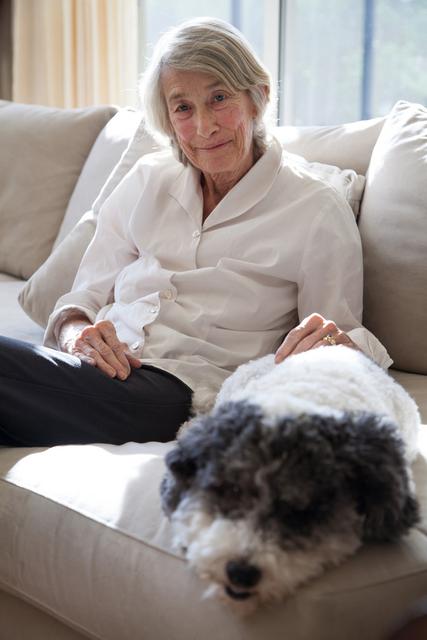 The poet Mary Oliver with her dog, Ricky, in 2013 at her home in Hobe Sound, Fla. Throughout her work, Ms. Oliver was occupied with intimate observations of the natural world. Credit: Angel Valentin for The New York Times Mary Oliver, a Pulitzer Prize-winning poet whose work, with its plain language and minute attention to the natural world, drew a wide following while dividing critics, died on Thursday at her home in Hobe Sound, Fla. She was 83. Her literary executor, Bill Reichblum, confirmed the death. Ms. Oliver had been treated for lymphoma, which was first diagnosed in 2015. A prolific writer with more than 20 volumes of verse to her credit, Ms. Oliver received a Pulitzer Prize in 1984 for her collection “American Primitive,” published by Little, Brown & Company. She won a National Book Award in 1992 for “New and Selected Poems,” published by Beacon Press. Ms. Oliver, whose work appeared often in The New Yorker and other magazines, was a phenomenon: a poet whose work sold strongly. Her books frequently appeared on the best-seller list of the Poetry Foundation, which uses data from Nielsen BookScan, a service that tracks book sales, putting her on a par with Billy Collins, the former poet laureate of the United States, as one of the best-selling poets in the country. Her poems, which are built of unadorned language and accessible imagery, have a pedagogical, almost homiletic quality. It was this, combined with their relative brevity, that seemed to endear her work to a broad public, including clerics, who quoted it in their sermons; poetry therapists, who found its uplifting sensibility well suited to their work; composers, like Ronald Perera and Augusta Read Thomas, who set it to music; and celebrities like Laura Bush and Maria Shriver. All this, combined with the throngs that turned out for her public readings, conspired to give Ms. Oliver, fairly late in life, the aura of a reluctant, bookish rock star. Throughout her work, Ms. Oliver was occupied with intimate observations of flora and fauna, as many of her titles — “Mushrooms,” “Egrets,” “The Swan,” “The Rabbit,” “The Waterfall” — attest. Read on one level, these poems are sensualist still lifes: Often set in and around the woods, marshes and tide pools of Provincetown, Mass., where she lived for more than 40 years, they offer impeccable descriptions of the land and its nonhuman tenants in a spare, formally conservative, conversational style. In “Spring,” here in its entirety, she wrote: I lift my face to the pale flowers of the rain. They’re soft as linen, clean as holy water. Meanwhile my dog runs off, noses down packed leaves into damp, mysterious tunnels. He says the smells are rising now stiff and lively; he says the beasts are waking up now full of oil, sleep sweat, tag-ends of dreams. The rain rubs its shining hands all over me. My dog returns and barks fiercely, he says each secret body is the richest advisor , deep in the black earth such fuming nuggets of joy! For her abiding communion with nature, Ms. Oliver was often compared to Walt Whitman and Robert Frost. For her quiet, measured observations, and for her fiercely private personal mien (she gave many readings but few interviews, saying she wanted her work to speak for itself), she was likened to Emily Dickinson. Ms. Oliver often described her vocation as the observation of life, and it is clear from her texts that she considered the vocation a quasi-religious one. Her poems — those about nature as well as those on other subjects — are suffused with a pulsating, almost mystical spirituality, as in the work of the American Transcendentalists or English poets like William Blake and Gerard Manley Hopkins. Readers were also drawn to Ms. Oliver’s poems by their quality of confiding intimacy; to read one is to accompany her on one of her many walks through the woods or by the shore. Poems often came to her on these walks, and she prepared for this eventuality by secreting pencils in the woods near her home . Throughout Ms. Oliver’s career, critical reception of her work was mixed. Some reviewers were put off by the surface simplicity of her poems and, in later years, by her populist reach. Reviewing her first collection, “No Voyage,” in The New York Times Book Review in 1965, James Dickey wrote, “She is good, but predictably good,” adding: “She never seems quite to be in her poems, as adroit as some of them are, but is always outside them, putting them together from the available literary elements.”  Ms. Oliver received a Pulitzer Prize in 1984 for her collection “American Primitive.” More recently, David Orr, the poetry columnist for The New York Times Book Review, was even more dismissive. In 2011, he referred to Ms. Oliver as a writer “about whose poetry one can only say that no animals appear to have been harmed in the making of it.” (That comment drew a retort from Ruth Franklin of The New Yorker, who wrote in an admiring article about Ms. Oliver in 2017, “The joke falls flat, considering how much of Oliver’s work revolves around the violence of the natural world.”) Ms. Oliver’s champions argued that what lay beneath her work’s seemingly unruffled surface was a dark, brooding undertow, which together with the surface constituted a cleareyed exploration of the individual’s place in the cosmos. “Her corpus is deceptively elementary,” the writer Alice Gregory says in an essay on the website of the Poetry Foundation. “But you miss a lot by allowing the large language to overshadow the more muted connective tissue. Paying such crude attention will not grant you the fortifying effects Oliver has to offer.” Mary Oliver with Coleman Barks, 4 Aug 2001. Credit: Video by Lannan Foundation Mary Oliver was born on Sept. 10, 1935, in Cleveland to Edward and Helen (Vlasak) Oliver, and grew up in Maple Heights, Ohio, a suburb of Cleveland. Her father was a teacher and her mother a secretary at an elementary school. In one of her rare interviews, with Ms. Shriver in O: The Oprah Magazine in 2011, Ms. Oliver spoke of having been sexually abused as a child, though she did not elaborate. “I had a very dysfunctional family, and a very hard childhood,” she told Ms. Shriver. “So I made a world out of words. And it was my salvation.” Leaving home as a teenager — she would study briefly at Ohio State University and Vassar College but took no degree — Ms. Oliver spontaneously drove to Steepletop, Edna St. Vincent Millay’s former home in Austerlitz, N.Y., near the Massachusetts border. Ms. Oliver lived at Steepletop for the next half-dozen years, helping Millay’s sister Norma organize her papers. In the late 1950s, on a return visit to Steepletop, Ms. Oliver met Molly Malone Cook , a photographer, who became her life partner and literary agent. Ms. Cook died in 2005. No immediate family members survive. Ms. Oliver taught at Bennington College and elsewhere. Her other poetry collections include “The River Styx, Ohio” (1972), “House of Light” (1990), “The Leaf and the Cloud” (2000), “Evidence” (2009), “Blue Horses” (2014) and “Felicity” (2015). Her prose books include two about the craft of poetry, “Rules for the Dance” (1998) and “A Poetry Handbook” (1994), and “Long Life: Essays and Other Writings” (2004). Given its seeming contradiction — shallow and profound, uplifting and elegiac — Ms. Oliver’s verse is perhaps best read as poetic portmanteau, one that binds up both the primal joy and the primal melancholy of being alive. For her, each had at its core a similar wild ecstasy. In one of her best-known poems, “When Death Comes,” she wrote: When it’s over, I want to say: all my life I was a bride married to amazement. I was the bridegroom, taking the world into my arms. When it’s over, I don’t want to wonder if I have made of my life something particular, and real. I don’t want to find myself sighing and frightened, or full of argument. I don’t want to end up simply having visited this world. Ana Fota contributed reporting. https://www.nytimes.com/2019/01/17/o...gtype=Homepage |
|
|
|
| The Following 10 Users Say Thank You to Orema For This Useful Post: |
|
01-20-2019, 11:50 PM
|
#5 |
|
Practically Lives Here
How Do You Identify?:
Transgender Preferred Pronoun?:
He/him/his Relationship Status:
Single 
Join Date: Jul 2014
Location: Oklahoma
Posts: 17,752
Thanks: 31,018
Thanked 28,833 Times in 9,708 Posts
Rep Power: 21474865 |
|
|
|
|
| The Following 4 Users Say Thank You to JDeere For This Useful Post: |
 |
|
|


 Hybrid Mode
