
|
|
|
 05-01-2013, 11:13 AM
|
#1 |
|
Member
How Do You Identify?:
FTM/Male (Will 14) Relationship Status:
Caught An Angel and she doesn't lie! Join Date: May 2012
Location: @
Posts: 784
Thanks: 2,256
Thanked 1,857 Times in 614 Posts
Rep Power: 21474850   |
 House Wren
 The wrens are here looking for the best nest. Very interesting ritual that the pair goes through to build said nest. The male presents several to the female and she decides where they will live. Was not aware, until now, that they destroy other birds nests. Very territorial and has a wonderful song. http://www.allaboutbirds.org/guide/House_Wren/sounds Physical Description Male and female House Wrens look alike. They have grayish brown upperparts, buff or pale-buff underparts, and faint buff or dusky brown eyebrows. Juveniles have a reddish brown rump, and their underparts are a darker buff. Distribution and Breeding Habitat House Wrens occupy the northern two-thirds of the United States and parts of Canada. They breed in forest edges, shrub lands, swamps, fields, farmlands, and suburban parks. House Wren Range Map Diet Gleaning their food from tree foliage, House Wrens feast on a variety of invertebrates, including millipedes, spiders, snails, caterpillars, grasshoppers, ants, and beetles. Pair Formation and Territoriality The male arrives first on the breeding territory. Once he establishes a territory, he builds "dummy nests" in all available cavities on his territory. When the female arrives, she selects a nest site that may or may not be one of the nests started by the male. House Wrens are very territorial. Although they use only one nest cavity at a time, they vigorously defend all cavities in their territory. As part of this defense, House Wrens often pierce and destroy the eggs of other cavity-nesting species such as Eastern Bluebirds and Tree Swallows that attempt to nest within their territory. The House Wren's mating system is complex. A male may pair with one female for part of the season to raise a brood. He might then mate with a different female to raise the second or third brood of the breeding season. Males may also be mated to two females simultaneously. Nesting Behavior Nest Building: The breeding season begins in late April for birds living in the southern portion of their range; it begins in early May in the northern portion. House Wrens nest in natural cavities, tree stumps, woodpecker holes, building nooks and crannies, and in nest boxes. They have also been known to nest in such unique places as cow skulls, flower pots, tin cans, boots, scarecrows, and the pockets of hanging laundry. Males begin building the nest by filling the nest cavity with small sticks. Up to 500 sticks have been counted in a single nest. High behind this pile, the female constructs a nest cup from various soft materials, like feathers, hair, wool, spider cocoons, strips of bark, rootlets, moss, and trash. Egg Laying: Females lay one egg per day until the clutch is complete. The average clutch size is 6 to 8 eggs, but up to 12 eggs have been reported. The eggs are glossy white, sometimes tinted with pink or buff. They are uniformly and profusely marked with fine pinkish brown, reddish brown, and brown specks, which sometimes form a ring near the larger end of the egg. Incubation: The incubation period lasts 13 to 15 days. Females begin to incubate on the day the next-to-last, or penultimate, egg is laid. Males occasionally feed their mates during this period. Nestling Care: Both adults care for the young. The young fledge after 12 to 18 days. Although able to fly, the fledglings continue to be fed by their parents for approximately two weeks. The female may begin to renest while young are still dependent; the male then becomes the primary caretaker of the young. Pairs usually raise two broods per breeding season. Some pairs can successfully raise three broods. Winter Movement and Dispersal House Wrens migrate to the southern United States and Mexico for the winter. Males return to the same breeding territory year after year. There is no information on site fidelity in females. There is no information on juvenile dispersal. Visit Shaw Creek Bird Supply to see our selection of House Wren Houses. |

|

|
|
05-20-2013, 07:01 PM
|
#2 |
|
Member
How Do You Identify?:
FTM/Male (Will 14) Relationship Status:
Caught An Angel and she doesn't lie! Join Date: May 2012
Location: @
Posts: 784
Thanks: 2,256
Thanked 1,857 Times in 614 Posts
Rep Power: 21474850 |
Great blue heron
I saw one of these today.
 I saw a juvenile. 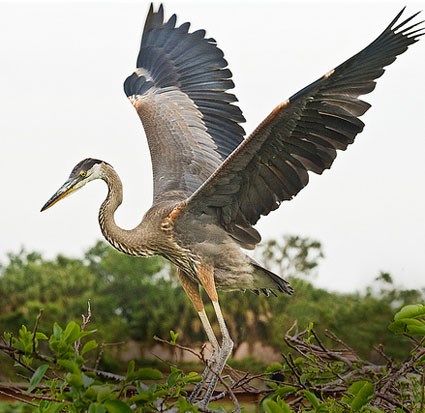 I have seen them here too. http://cams.allaboutbirds.org/channe...t_Blue_Herons/ Last edited by DMW; 05-20-2013 at 07:08 PM. |
|
|
|
|
05-28-2013, 04:54 AM
|
#3 |
|
Member
How Do You Identify?:
FTM/Male (Will 14) Relationship Status:
Caught An Angel and she doesn't lie! Join Date: May 2012
Location: @
Posts: 784
Thanks: 2,256
Thanked 1,857 Times in 614 Posts
Rep Power: 21474850 |
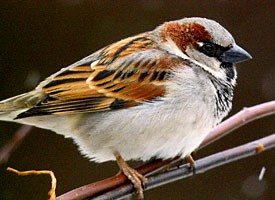 Loud obnoxious bird. Identified as a sparrow, but really isn't. LOB works for me. Info enough... You can find House Sparrows most places where there are houses (or other buildings), and few places where there aren’t. Along with two other introduced species, the European Starling and the Rock Pigeon, these are some of our most common birds. Their constant presence outside our doors makes them easy to overlook, and their tendency to displace native birds from nest boxes causes some people to resent them. But House Sparrows, with their capacity to live so intimately with us, are just beneficiaries of our own success. |
|
|
|
| The Following 2 Users Say Thank You to DMW For This Useful Post: |
|
06-08-2013, 01:00 PM
|
#4 |
|
Member
How Do You Identify?:
FTM/Male (Will 14) Relationship Status:
Caught An Angel and she doesn't lie! Join Date: May 2012
Location: @
Posts: 784
Thanks: 2,256
Thanked 1,857 Times in 614 Posts
Rep Power: 21474850 |
Eastern Bluebird
 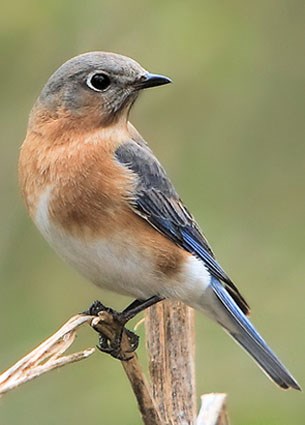 Saw a pair of these beautiful birds for the first time! Incredible! http://www.allaboutbirds.org/guide/E...rd/lifehistory Interestingly enough, speckled starlings were nearby, among the pines, the bluebirds nest. And some bullfrogs. |
|
|
|
| The Following 2 Users Say Thank You to DMW For This Useful Post: |
|
06-15-2013, 08:24 AM
|
#5 |
|
Member
How Do You Identify?:
FTM/Male (Will 14) Relationship Status:
Caught An Angel and she doesn't lie! Join Date: May 2012
Location: @
Posts: 784
Thanks: 2,256
Thanked 1,857 Times in 614 Posts
Rep Power: 21474850 |
Spotted Towee
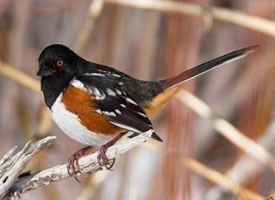 Male  Female Very interesting Cool Facts The Eastern Towhee and the very similar Spotted Towhee of western North America used to be considered the same species, the Rufous-sided Towhee. The two forms still occur together in the Great Plains, where they sometimes interbreed. This is a common evolutionary pattern in North American birds – a holdover from when the great ice sheets split the continent down the middle, isolating birds into eastern and western populations that eventually became new species. |
|
|
|
|
06-20-2013, 06:12 PM
|
#6 |
|
Member
How Do You Identify?:
FTM/Male (Will 14) Relationship Status:
Caught An Angel and she doesn't lie! Join Date: May 2012
Location: @
Posts: 784
Thanks: 2,256
Thanked 1,857 Times in 614 Posts
Rep Power: 21474850 |
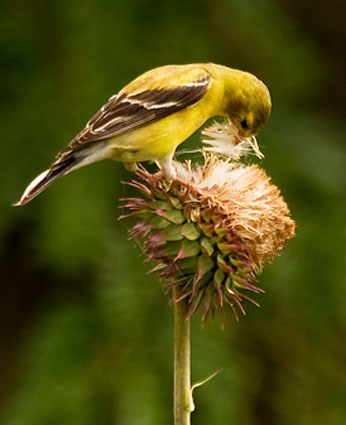
Last edited by DMW; 06-20-2013 at 06:17 PM. |
|
|
|
| The Following User Says Thank You to DMW For This Useful Post: |
|
10-25-2013, 12:12 PM
|
#7 |
|
Infamous Member
How Do You Identify?:
sugar and spice Preferred Pronoun?:
she Join Date: Jul 2011
Location: at the end of the rainbow
Posts: 6,782
Thanks: 10,477
Thanked 6,730 Times in 1,825 Posts
Rep Power: 21474856 |
elegance...

__________________
Do not meddle in the affairs of Dragons,
for you are crunchy and taste good with ketchup! http://fc05.deviantart.net/fs11/i/20...ockAvatars.gif |
|
|
|
 |
| Tags |
| bees, birds, fun, images, insects |
|
|


 Hybrid Mode
